Quick Answer
Yes, in practice: courts will not ban AI document review, but by 2027 a documented attorney checkpoint, recording who designed, sampled and approved the review, will likely decide whether it is defensible.
Accuracy alone will not carry the argument. In a 2024 r/ediscovery thread, practitioners who praised generative review results still disagreed about its cost, its label and whether it beat TAR at all. Metrics invite dispute. A signed record of human checks settles who answers for them.
Key Points
- Under Federal Rule of Civil Procedure 26(g), the attorney who signs discovery responses certifies them after a reasonable inquiry, and AI coding feeds straight into that certification.
- The Sedona Conference's January 2027 institute in Phoenix centers on the lawyer's role in designing, supervising, testing, refining and documenting AI review, not on any single statistical formula.
- ComplexDiscovery, republished by EDRM in August 2024, put generative AI recall usually in the 70% range out of the box and in the 90% range after testing and iteration.
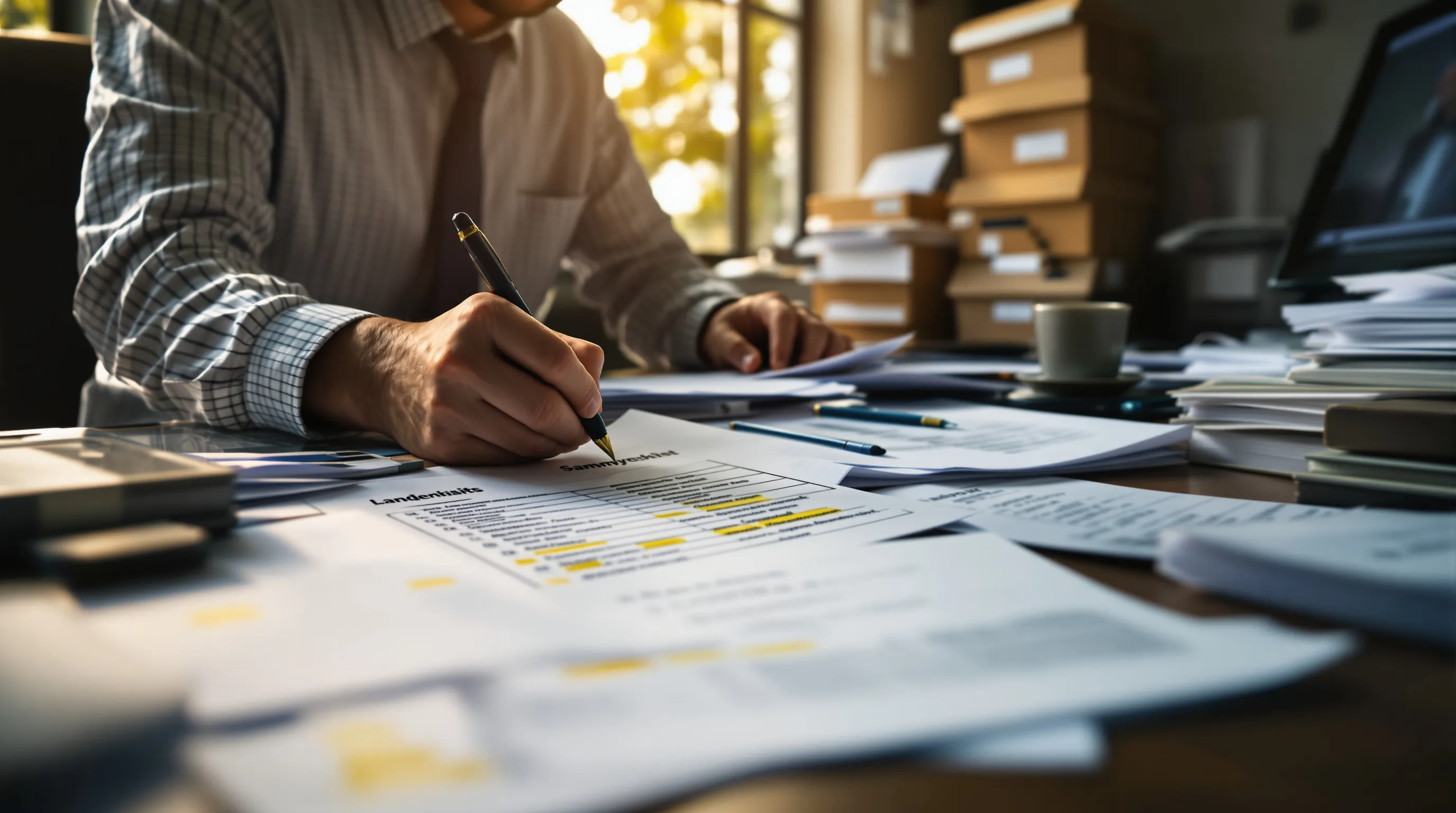
The human checkpoint: an attorney signing off on what the AI review produced.
Agentic review has arrived faster than the rules written for it. In 2024, one practitioner reported that when ILTA sessions asked who was using generative AI for auto coding, "lots of folks raised their hands." That same year, a survey of more than 400 respondents found that more than a third of corporate counsel supported firms using generative AI. Adoption is not the open question.
Price was, for a while. One practitioner wrote in 2024 that generative review cost was "still roughly the same as human review" and needed to fall to a tenth of that. Curiously, nobody in that exchange asked who would sign for the results. That omission is the subject of this article.
Courts have long cared less about the tool than about the account a party gives of it. In Anand v. U.S. Department of Health and Human Services, the federal court in the District of Columbia restated that an agency claiming undue burden must give a detailed explanation of the time and expense of its search. The standard concerned a manual search, as it happened, and a FOIA request rather than civil discovery. It seemed to me, reading it, that a judge who expects a detailed account of a search will eventually expect one of a review protocol too.
What follows takes four questions in order: whether courts will require human oversight, whether accuracy numbers alone can defend a review, whether oversight brings back the cost AI removed, and which review models keep a lawyer and privilege in control. Each answer turns on a record, not a reread. The record is KEY, and the first question is the one judges are already asking.
Courts are unlikely to ban AI document review, and I doubt they will ever feel the need. What they are already asking for is narrower and, curiously, harder to fake: proof that a named attorney designed the review, checked what it produced, and can explain both choices to a judge. That documented checkpoint is what I expect to become the working test of defensibility by 2027. Accuracy is a number. Oversight is a record.
The forecast rests less on prophecy than on paperwork. A 2026 article in the Journal of Technology Law & Policy presents itself as a roadmap for litigants and judges, and it predicts that generative AI will carry these tools to a much broader range of litigants. More users means more judges ruling on the merits of AI review. Those judges will want to see the validation, not merely hear about it.
A speculative essay published in May 2026 went further, imagining complex litigation judges in 2029 issuing formal AI management orders that require parties to identify the tools used for large-scale review and privilege screening. The fiction is instructive. Its imagined orders regulate AI rather than forbid it, and the regulation lands on the person, not the model. For a solo litigator facing one messy collection, the practical question becomes who can sign for the review, and what that signature has to rest on.
Will courts actually require a human to oversee AI document review?
Courts will not ban AI review; they will ask who checked it. AI-assisted review runs cents per document against roughly $19K/GB manually, so documenting that check is affordable.
Before trusting any AI first pass, I would run three checks, in this order:
- Name the accountable attorney who designed the workflow and who will sign off on it.
- Sample the output with a documented method before anything leaves the building.
- Preserve the trail: originals, coding decisions and sign-offs, kept so that a stranger could reconstruct them a year later.
The order is not arbitrary. A 2026 article in the Journal of Technology Law & Policy, by Aron Ahmadia and four co-authors, found that courts and opposing parties "rightly demand heightened verification that the workflow is well designed and that the evidentiary output is sufficiently accurate." Note the two objects of that sentence. The workflow comes first. The output comes second. The authors measure both with random and stratified sampling, confidence intervals and margins of error, and then, somewhat pointedly, pair the statistics with qualitative safeguards, using the Federal Rules of Civil Procedure as the benchmark. Even the iterative workflows they examine are described as adapting to human input, which is a polite way of saying a person is still in the room.
The common assumption is that the courtroom fight over AI review will be about accuracy. I think that is only half right. Accuracy is a number. A workflow is a story about who decided what, and when, and judges have spent their entire careers evaluating stories.
Read together, 4 sources point the same way: the scholarship, the per-document economics, and two descriptions of how a defensible tool is built all place a person, and a record of that person, at the center. At Relevant, our view is that a review should be defensible on its face, with immutable originals under content hashing, append-only audit trails, documented chain of custody and a fail-closed privilege gate on production, so the process holds up if opposing counsel challenges it. Enterprise platforms have long supplied Bates numbering, privilege handling and chain of custody; the newer AI entrants supply cited Q&A and chronologies. Our approach is the combination, not one or the other, for a fairly unglamorous reason. A checkpoint is only as good as the record underneath it.
In practice, this changes what a small firm should ask before buying anything. The question is not whether the model is clever. The question is whether you can show your work, which is, curiously, the same thing every math teacher has asked of every student since the invention of homework. Keyword-hunting through a mailbox already fails that test, for the reasons set out in why searching Outlook isn't a defensible document review, and AI review without a documented checkpoint can fail it in a far more expensive way. What judges have already written on the subject turns out to be less ambiguous than the marketing suggests.
Can accuracy numbers alone defend an AI document review?
The best-known judicial orders about AI govern court filings. Document review is signed under a different rule, and that rule already asks a question accuracy numbers cannot answer on their own.
In Dallas, U.S. Magistrate Judge David Horan issued a standing order that allows AI-assisted drafting but makes the filer confirm that every cited case exists and is still good law. He and a magistrate judge in the Southern District of Indiana, whom lawyers discussing that ruling identified as Mark Dinsmore, wrote the same line: "the use of artificial intelligence must be accompanied by the application of actual intelligence in its execution." Forum commenters report that many state and federal courts now require certification that AI-assisted filings were checked.
Rule 11, the federal rule on signing court papers, ends with a clause most people skip: it "does not apply to disclosures and discovery requests, responses, objections, and motions under Rules 26 through 37." Filing rules reach a document production only by analogy.
Discovery has its own signature requirement. Under Rule 26(g), an attorney who signs a disclosure certifies that, to the best of the attorney's knowledge "formed after a reasonable inquiry," it is "complete and correct." An AI review feeds straight into that certification. None of our sources shows a court defining a reasonable inquiry into AI coding, but the organizations judges turn to have started to describe one.
Courts and practitioners "frequently rely on" commentaries from the Sedona Conference, a nonprofit of lawyers, judges, academics and technical experts. Its January 2027 institute in Phoenix lists dialogue leaders from three federal district courts, the Arizona Supreme Court and a Georgia state court. One session asks how lawyers know a review process is working, and answers with five verbs.
"The panel will focus on the lawyer's role in designing, supervising, testing, refining, and documenting the process rather than on any single technology or statistical formula."
The Sedona Conference, 2027 Institute program, 2026
A program description binds no court. A 2026 Journal of Technology Law & Policy article lands nearby: its five co-authors say courts and opposing parties "rightly demand heightened verification" of AI review, pairing sampling and confidence intervals with "qualitative safeguards" for workflows that "adapt to human input."
Some AI review leaves little room for that input. Industry commentary sorts generative AI review into three models, which differ in who teaches the model and who checks its work.
| Model | What guides the AI | Who checks the work | How the sources describe it |
|---|---|---|---|
| Autonomous | The review protocol only | The AI itself | "perilously close to the world of 'robo-reviewers'" (Torys); risky if not "sufficiently validated by human reviewers" (EDRM) |
| Assisted | The protocol plus lawyer-reviewed documents | Humans and AI | "strikes a balance between efficiency and accuracy" (EDRM) |
| Assisted, iterative | Assisted, plus ongoing feedback | Humans, refining the model until target recall and precision are met | "maximizes the efficacy of the AI while minimizing the risk of errors" (EDRM) |
Torys, a Canadian law firm, calls the autonomous model "arguably the most efficient." Its source, a ComplexDiscovery article by editor Rob Robinson built on an interview with an eDiscovery provider's chief AI officer and republished by EDRM, notes that "the judiciary has widely accepted both linear review and TAR," while generative AI still faces "acceptance hurdles." The autonomous model also leaves the least to show a judge, because it removes the step where humans check the work and leave a record.
The article's accuracy figures, charted below, point the same way: the higher recall arrives only after human testing and iteration. Courts, the article adds, "may examine both recall and precision."
Side by side, two apparently separate requirements turn out to be the same work. The 90% figure comes from people sampling, correcting and retesting, and a documented checkpoint is the record of that work. A recall number with no human process behind it leaves the signing lawyer nothing to show for the reasonable inquiry Rule 26(g) asks about. Our sources stop short of a court ordering a human checkpoint for AI review, and the discovery standard so far rests on an existing rule and respected commentary. We build review software that logs each coding decision, so we have a stake in documentation mattering. The sources above do not.
Before the next AI-assisted production
- Before signing discovery responses, ask whether you could explain to a judge what your "reasonable inquiry" into the AI's coding was.
- If your judge has an AI standing order, check whether its text reaches discovery or only filings.
- Organize review notes around Sedona's five verbs: who designed, supervised and tested the process, what was refined, and where each step is documented.
- If a tool offers an autonomous mode, ask the vendor, us included, when a lawyer samples and corrects the output before coding is final.
- Report recall and precision together, and keep the sampling rounds that produced them.
How we checked this
We read the text of Federal Rules 11 and 26, the Sedona Conference's 2027 program, the abstract of a 2026 law review article, a Torys LLP article, a ComplexDiscovery article republished by EDRM, an Above the Law column on Judge Horan's order, and a lawyers' forum thread about a Courtwatch report. None of the figures here are ours. The Sedona material is a program description, not guidance from a court. The recall figures come from one interview with an executive at an eDiscovery provider, written up by an editor who also works as a technology marketer. Judge Dinsmore's identification and the claim about certification requirements come from forum commenters. Torys writes from a Canadian perspective. We sell AI review software with audit trails, so we have a commercial stake. Still unknown: how any court has ruled when a generative AI review was challenged, and what "reasonable inquiry" requires for AI coding.
- Legal Information Institute, Federal Rule of Civil Procedure 26, retrieved November 18, 2026.
- Legal Information Institute, Federal Rule of Civil Procedure 11, retrieved November 18, 2026.
- The Sedona Conference, 2027 Institute program on eDiscovery and AI, September 2026.
- Ahmadia, Reff, Reiber, Roberts and Traylor, Journal of Technology Law & Policy article on validating AI review, 2026.
- Torys LLP, generative AI and the future of eDiscovery, Q4 2024.
- Rob Robinson, ComplexDiscovery, eDiscovery review in transition, republished by EDRM, August 16, 2024.
- Above the Law, column on Judge Horan's AI standing order, May 29, 2025.
- r/Lawyertalk, discussion of a Courtwatch report on AI citations, March 3, 2025.
Doesn't human oversight bring back the cost problem AI was supposed to solve?
Only if oversight means rereading everything. When every AI answer links back to its exact source exhibit, an attorney verifies with one click instead of repeating the review.
The worry is not imaginary, and a federal court has already put a price on it. In 2023, in Anand v. U.S. Department of Health and Human Services, the U.S. District Court for the District of Columbia considered what a purely human review of agency case files would cost. The agency's declarant explained that even if the inspector general's entire FOIA staff worked solely on the one request, it would take them over nine years. In 2023, Judge Colleen Kollar-Kotelly summarized the showing as approximations of 28 years and expense "in the millions of dollars," with salary alone above $3.5 million, a figure the agency said "vastly understates the costs." The court held that the estimate "far exceeds" burdens other courts had found undue, which in its cited precedents ran to approximately 3,675 hours in one case and more than 8,000 hours in another.
There is a small detail in the opinion I find oddly moving. "The Court confirmed this calculation." The judge, in other words, did the arithmetic herself.
Here is the tension, then. Courts want a human accountable for review. Courts also recognize, in writing, that humans reading everything is sometimes a decades-long proposition. Both things are true at once. A checkpoint that requires a lawyer to repeat the machine's work is not a checkpoint. It is the original problem, wearing a lanyard.
The resolution, as it seemed to me, lies in what the human is asked to do. Verification and re-review are different jobs:
- Re-review asks a person to read the collection again, which reproduces the burden the court in Anand was measuring.
- Verification asks a person to confirm that a specific coding call or answer matches a specific document, which takes moments when the source is one click away.
Our product design starts from that distinction. Every answer traces to the exact exhibit it came from, so an attorney can check it before filing, and our demo asks a buyer to bring a messy collection and a hard question, then watch the tool read, code and cite their own evidence rather than read a case study about someone else's. The evidence also stays in the client's own cloud account under the client's own keys, which matters more than it sounds. A verification record is easier to stand behind when nobody else held the documents.
One practical note. The record should also capture which model produced which coding, because an AI review vendor can swap models mid-matter, and an attorney cannot attest to a process that quietly changed underneath them.
In summary, human oversight only recreates the cost problem when it is designed as repetition; designed as source-linked verification, it becomes the cheapest part of a defensible review.
Which kind of AI review keeps a lawyer, and privilege, in control?
Assisted or iterative review with attorney validation, run single-tenant or inside your own AWS account with no vendor retention or model training, keeps both judgment and privilege under counsel's control.
Generative AI review is not one thing. The Canadian firm Torys LLP, in an essay with the faintly Asimovian title "I, Robot-Reviewer?", sorts the emerging tools into three categories, and the categories turn out to be a map of where the human sits:
| Review model | What trains the model | Who checks the output | Where the human sits |
|---|---|---|---|
| Gen AI assisted review | The review protocol plus documents lawyers have already reviewed | Significant human validation | Inside the loop; closest to continuous active learning |
| Gen AI iterative assisted review | Assisted review, refined with ongoing feedback | Iterative human validation | Inside the loop, repeatedly |
| Gen AI autonomous review | The review protocol only | Relies heavily on the model's own QC | Mostly outside the loop |
Torys calls the autonomous version arguably the most efficient, and then adds that it "slides perilously close to the world of 'robo-reviewers', and without sufficient human oversight, creates considerable risk of inaccuracy, as well as the inadvertent production of privileged or confidential information." The firm's conclusion is blunter still: "all Gen AI eDiscovery reviews will continue to require oversight by legal professionals and skilled eDiscovery technologists to ensure accuracy, especially with respect to the protection of legally privileged documents."
Practitioners say much the same thing in less tailored language. In a 2025 r/ediscovery thread, one commenter noted that Relativity's generative tool "isn't capable of handling all review scenarios and/or document types," and another wrote that review done "correctly and defensibly" will change workflows without eliminating human reviewers. Privilege is the hinge. An autonomous reviewer cannot be cross-examined about why it waived something.
So my answer to the resolution question is this. Pick the assisted or iterative model, and keep the evidence somewhere the privilege analysis stays simple. Our platform processes single-tenant or inside the client's own AWS account under the client's own keys, with no vendor retention and no model training, so nothing fed to it trains anyone's model or waives privilege. It was also built to be operable and affordable for a solo or small firm on a single messy matter, which matters because enterprise-grade defensibility is useless to a firm that cannot afford to switch it on. The verification step itself is the subject of a related piece on source-linked review as the new defensibility bar.
Notice what none of these sources argue. Nobody says the model must be more accurate before a court will accept it. So ask any vendor what its tool does when it is unsure of a coding call: route the document to a lawyer, or guess? One intake-automation vendor, KKAI LLC, says its own workflow sends low-confidence items to a staff member for review and keeps client data in the firm's environment "to support privilege compliance." Which brings us, inevitably, to the metrics everyone keeps quoting.
What should a small firm do before agentic review reaches its next matter?
Treat attorney oversight as a record you build during review, not a defense you assemble after a challenge, because courts already judge the person who signs, not the software.
Judge David L. Horan's standing order in the Northern District of Texas, which Nicole Black examined for Above the Law in 2025, put the principle more crisply than any brochure: "The use of artificial intelligence must be accompanied by the application of actual intelligence in its execution." The order concerned citations, not coding calls. Curiously, the logic transfers intact. Black's own version was shorter: "If you sign it, you own it."
Courts have accepted a human checkpoint for years without calling it one. In 2024, first-generation TAR still began with an attorney reviewing a training subset of typically 5,000 to 20,000 documents. Agentic tools quietly remove that ritual. I expect a documented sign-off to replace it by 2027: who designed the protocol, who sampled the output, who approved production.
I should admit what the evidence cannot settle. It contains no ruling on an agentic review protocol, so the date is an inference from orders about filings, not a holding about discovery. (Legal prophecy tends to look inevitable only afterward.)
In any case, the practical move is identical. Keep the record while the review runs, because rebuilding it later means rereading the very documents the AI was meant to spare you.
Summarize This Article With AI
Open this article in your preferred AI engine for an instant summary.
Frequently Asked Questions
What else do litigators ask about human oversight of AI document review?
Most remaining questions concern how much human review survives, what it costs, and where an attorney's eyes still belong once AI handles the first pass.
Will AI eliminate first-level document review?
Not entirely. First-level review is the initial pass that sorts documents into responsive and non-responsive. In a 2025 r/ediscovery thread, one practitioner expected generative review to "reduce the total number of documents requiring human review, possibly substantially," while others expected human QC of that pass to persist. Fewer reviewers, then, but not none.
If AI review becomes effectively free inside a platform, does oversight still matter?
More than before. A commenter in the same thread said Relativity's aiR was scheduled to join its hosting environment from April 2026, making it effectively "free" rather than an add-on. When the machine costs nothing, the attorney's sign-off becomes the only line item a court will actually examine.
Where does a lawyer still need to look at documents?
At second-level review, privilege review and quality control. TAR already reduced first-level reviewers without removing lawyers from those three stages. I see no reason agentic tools should be treated more generously than the methods courts already know.
Can AI handle redactions without a lawyer?
Almost. One practitioner described AI redaction modules as tools that "only need minimal QC." Minimal is a curious word in a privilege dispute, since it still names a person.
How can I see oversight working on my own matter?
Reach Relevant e-Discovery through its contact page at relevantediscovery.com/contact-us and run the review on your own documents, where the question of who checked what stops being hypothetical.
Written by
Michael
Kansky
Michael Kansky is a serial software entrepreneur who has spent more than two decades building and bootstrapping profitable SaaS and services companies.
Connect on LinkedInRead next
 Ediscovery
Offshore Document Review: The Privilege Risk Nobody Prices
Not on supervision alone. Offshore review saves labor, but a confidentiality agreement cannot verify where privileged files travel, which country's data law reaches them, or keep malpractice exposure off your firm.November 20, 202620 min read Ediscovery
AI First-Pass Review vs a 5-Person Review Team
An AI first pass checked by one attorney can match a five-person team's recall on a mid-size matter in far fewer hours, if sampling proves it. Privilege is different.November 16, 202622 min read Ediscovery