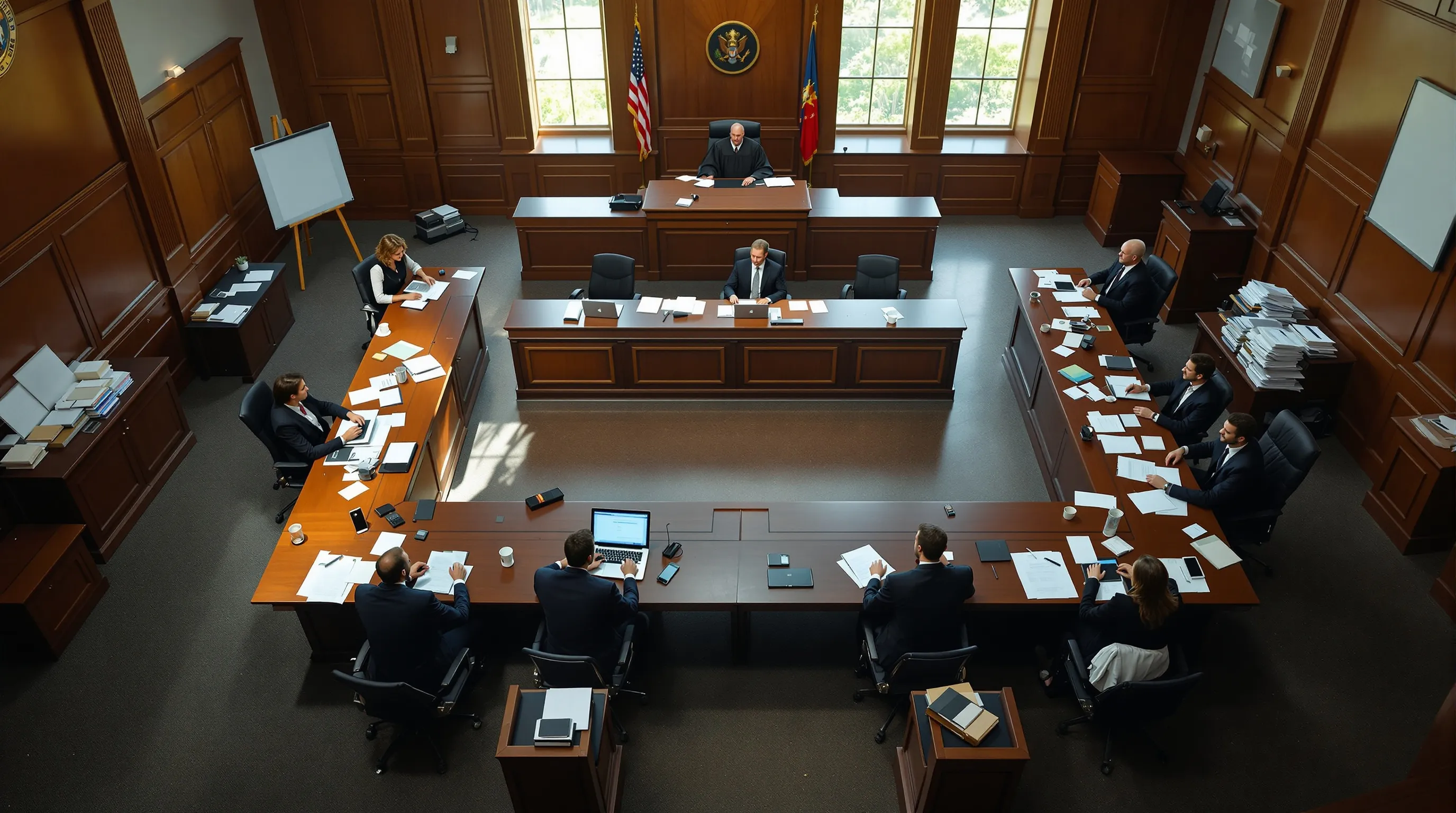
Florida's 2026 court-administration amendments move the ESI scope decision from the production phase to the first case-management conference, months earlier than prior Florida rules have ever required. If your current workflow builds discovery scope incrementally, the deadline has moved.
Quick Answer
The Short Answer
Florida's 2026 amendments require attorneys to present a defensible ESI scope at the first case-management conference. Proportionality is no longer a production-phase objection: it is a day-one obligation, enforceable by court order before a single document has been collected or produced.
Quick Answer
Florida's 2026 court-administration amendments may be the most consequential discovery change for small and mid-size litigation firms in a decade. The 2025 amendments gave practitioners a proportionality vocabulary modeled on Federal Rule 26(b)(1); the 2026 amendments give courts authority to use that vocabulary at the first case-management conference: before any written requests are served, before any meet-and-confer is held, and before any attorney has had the luxury of waiting to see what the other side actually asks for. What changes for you is not the doctrine. It is the clock.
What Do Florida's 2026 E-Discovery Amendments Actually Change?
Florida's 2026 amendment to the Florida Rules of General Practice and Judicial Administration builds directly on the 2025 amendments to the Rules of Civil Procedure, and moves the pressure point in time. In 2025, the Florida Supreme Court codified proportionality across all forms of discovery by amending Rule 1.280(c) to mirror the six-factor test of Federal Rule 26(b)(1). That was a substantive shift: attorneys finally had a codified hook for challenging overbroad ESI demands. What the 2026 amendments add is procedural: they intensify the court's active case management authority at the first case-management conference, before any party has produced a single document.
Attorneys at Gunster described the combined 2025-2026 amendments in Law.com's Daily Business Review as signaling "a new discovery age for Florida practitioners, promising benefits for those who play by the rules and potentially serious consequences for those who do not." That framing is right, and it captures something I have seen across years of working on defensible ESI processes: Florida has not always been a hotbed of discovery enforcement, but that has changed., as of .
Three specific aspects of the 2026 amendments matter most for daily practice:
- Active judicial intervention at the CMC: Courts may now define ESI scope at the first case-management conference without waiting for a formal discovery motion to be filed, based on expanded authority under the Rules of General Practice.
- Proportionality as a CMC agenda item: What was previously an objection raised after discovery requests arrived is now a required disclosure at the outset of the case: the requesting party must justify ESI breadth from day one.
- Expedited sanctions exposure for scope creep: Parties who expand ESI demands beyond what was disclosed at the CMC face expedited review under the amended rules, rather than having to navigate a full protective-order motion cycle.
In summary, the 2026 amendments do not redefine what proportionality means (Rule 1.280(c) already did that in 2025). They change where and when you must demonstrate it, moving the operative deadline months earlier than Florida practitioners have historically experienced.
When Does ESI Scope Become Binding Under the 2026 Rules?
The operative moment is the first case-management conference, and this is the change that catches most Florida litigation teams off guard.
Under prior Florida practice (and even under the 2025 amendments), the CMC was largely administrative: a scheduling event that addressed track assignment, mediation timelines, trial settings, and expert disclosure deadlines. ESI was, in practice, deferred until the first set of written discovery requests arrived and objections were exchanged. Rule 1.200 required track assignment and a CMO with firm deadlines, but the ESI conversation itself was treated as something to develop through meet-and-confer rather than resolve at the CMC itself.
The 2026 amendments close that gap. ESI scope is now a standard CMC agenda item under the Rules of General Practice. Specifically, each party must be prepared to address:
- The custodians, data sources, and date ranges it considers proportionate to the needs of the case under Rule 1.280(b)(1)'s six-factor test.
- Any format disputes (native versus processed formats, metadata fields, de-duplication methodology) that require court resolution before collection begins.
- A proportionality narrative tying proposed scope to the specific claims and defenses at issue, not a placeholder range based on the length of the parties' relationship.
Once the court enters a case management order reflecting that agreed or ordered scope, expanding it requires a showing of good cause. The Third District Court of Appeal's July 29, 2026 opinion in Opinion 2024-2141 signals that Florida appellate courts will not reverse CMC-stage ESI sanctions on harmless-error grounds. That signal is more consequential than the rule text itself, because it tells you that the standard for what counts as "good cause" will be construed narrowly going forward.
Extensions under the 2025 amendments were already described as "now rare"; under the 2026 amendments, the ESI scope component of the CMC order carries the same finality. In summary, the binding moment for Florida ESI decisions is earlier than it has ever been, and the cost of arriving unprepared has risen substantially.
How Do the 2026 Amendments Differ From the 2025 Changes?
The 2025 amendments were substantive; the 2026 amendments are procedural and administrative, and in my experience, procedural changes tend to catch more practitioners off guard precisely because they do not announce themselves as doctrine shifts.
The 2025 changes, adopted by the Florida Supreme Court and effective in 2025, introduced three major structural reforms: they codified proportionality for all discovery (not just ESI) by amending Rule 1.280(c) to mirror Federal Rule 26(b)(1)'s six factors; they required initial disclosures within 60 days of service; and they created Rule 1.202, a mandatory good-faith conferral requirement before non-dispositive motions. Those changes gave Florida practitioners a cleaner vocabulary for proportionality objections and a doctrinal hook for cost-shifting arguments that had previously rested on less stable ground.
The 2026 amendments do not change that vocabulary. They change when you must use it, and they put a judge in the room when you do.
| Dimension | 2025 Amendments | 2026 Amendments |
|---|---|---|
| Proportionality trigger | Objection standard after requests are served | Required CMC disclosure before requests are served |
| Judicial role | Passive: rules on motions filed after disputes arise | Active: sets scope at the CMC, before any dispute |
| ESI planning deadline | First discovery requests (well after CMC) | First case-management conference |
| Sanction exposure | Standard discovery motion practice | Expedited review for post-CMC scope creep |
| Extension standard | Now "rare" per amended Rule 1.200 | Good cause required to revisit CMC-locked scope |
| Small-firm impact | Moderate: clearer objection grounds available | High: front-loaded ESI preparation now required |
The table above reflects my read of both amendment cycles as they apply in a typical commercial case with two to five custodians (the scenario most common in small-firm Florida litigation). The 2025 proportionality language under Rule 1.280(c) already established that "blanket, overinclusive ESI requests or productions will be more vulnerable to successful challenges"; the 2026 amendments make that vulnerability appear earlier, when you may have less information about the case and less time to prepare a response.
In summary, the 2026 amendments do not create new substantive law. They enforce existing proportionality doctrine at an earlier, less forgiving stage of the case, and they do so with a judge actively managing the result rather than passively waiting for a motion.
What Must You Have Ready at the First Case-Management Conference?
In my experience working with litigation teams on ESI planning, the single most common failure mode is treating document collection as a production-phase problem.
The 2026 amendments make that approach untenable. By the time you walk into the first case-management conference, you need the following six items prepared and defensible: not drafted in outline form the morning of the hearing, and not left for the associate assigned to written discovery two months later.
CMC-Ready ESI Checklist for Florida Litigators:
- Custodian list: Named individuals whose data is potentially relevant, with their roles and the specific time period during which they were active on the matters at issue. A vague reference to "key employees" will not satisfy the 2026 requirement: courts expect names and tenure.
- Data source inventory: Email systems (Exchange, Google Workspace), cloud storage (SharePoint, Google Drive, Dropbox), collaboration platforms (Microsoft Teams, Slack), mobile devices, and any legacy or off-system repositories. Each source needs a status note: active, archived, or auto-deletion risk.
- Proposed date range: A defensible start and end date tied to the operative facts of the case, not a reflexive "five years" or "from the beginning" placeholder that opposing counsel will challenge at the CMC itself.
- Format position: Your stated position on native versus processed formats, de-duplication methodology, and which metadata fields must be preserved and produced, consistent with the proportionality analysis under Rule 1.280(b)(1).
- Proportionality narrative: A written or oral argument tying the ESI scope to the specific claims and defenses at issue, invoking the six Rule 1.280(b)(1) factors, including amount in controversy, the parties' relative access to relevant information, and whether the burden of the proposed discovery outweighs its likely benefit.
- Known preservation issues: Any litigation holds already issued, data sources with active auto-deletion policies, custodians who have left the organization since the relevant events, and any known device-upgrade or platform-migration gaps.
This checklist is the minimum viable ESI disclosure for a Florida CMC under the 2026 rules. Courts are not yet uniform in how rigorously they enforce the new requirements, but the Third District Court of Appeal's July 2026 opinion in Opinion 2024-2141 signals that appellate deference for CMC-stage ESI failures is narrower than it was before the amendments. Arriving without this preparation is no longer a procedural misstep that can be corrected at the next hearing. It is a sanction exposure event, and it is one that a defensible, prepared ESI workflow can prevent.
In summary, the 2026 rules require you to have done, before the first CMC, work that most Florida litigation workflows previously deferred until well into the discovery period.
Need a CMC-ready ESI scope that will hold up under Florida's 2026 amendments? See how Relevant Discovery builds defensible collections from day one.
Defensible e-Discovery & ESI Review
Immutable originals with content hashing, append-only audit trails, documented chain of custody, and a fail-closed privilege gate on production. AI-assisted review runs at cents per document versus the roughly $19K per GB of manual review, delivering enterprise-grade defensibility at small-matter economics, built for the 2026 CMC-first world. Privileged evidence never leaves your control: processing runs single-tenant, or inside your own AWS account under your own keys, with no vendor retention and no model training.
Learn How It WorksWritten by
Michael
Kansky
Michael Kansky is a serial software entrepreneur who has spent more than two decades building and bootstrapping profitable SaaS and services companies.
Connect on LinkedInSummarize This Article With AI
Open this article in your preferred AI engine for an instant summary.
What Will Matter Most in the Next 12-24 Months?
Florida courts are not yet uniform in how rigorously they enforce the 2026 CMC-stage ESI requirements: some courts are moving faster than others, and the Third District's July 2026 opinion is an early signal, not the endpoint. Over the next year to two years, I expect three developments to shape how the 2026 amendments play out in practice.
Judicial enforcement will converge upward. Early-adopter courts (those that have already treated the 2026 amendments as binding CMC obligations) will set the benchmark that other courts follow. The harmless-error signal from the Third District accelerates this: appellate validation of CMC-stage sanctions removes the ambiguity that might otherwise give trial courts reason to defer.
AI certification adds another CMC layer. The Florida Supreme Court's May 2026 rule amendment requiring attorneys to verify AI-generated content for accuracy, with sanctions for errors, adds a second layer of CMC-adjacent risk. If AI tools are used to draft the proportionality narrative or the custodian list, and they will be, that content must be independently verified before it is presented to the court.
Technology becomes the differentiator for small firms. The front-loaded ESI obligations created by the 2026 amendments are, in practice, a technology requirement. Firms that can generate a defensible custodian map, data source inventory, and proportionality argument from a structured ESI workflow will arrive at the CMC with a posture that firms relying on manual preparation will struggle to match.
In summary, the firms that treat the 2026 amendments as a technology and workflow question, not just a legal research question, will be the ones best positioned when courts begin enforcing them uniformly.
Frequently Asked Questions
What is the single most important change under Florida's 2026 e-discovery amendments?
The most important change is the timing of the ESI scope decision. Under the 2026 amendments to the Florida Rules of General Practice and Judicial Administration, custodians, data sources, date ranges, and format positions must be ready at the first case-management conference, not at the production phase. Courts may lock ESI scope by CMO at that first hearing, making later expansion subject to a good-cause standard.
Do the 2026 amendments apply to all Florida state court cases?
The 2026 amendments apply to Florida state civil court cases governed by the Florida Rules of Civil Procedure and the Rules of General Practice. Federal cases in Florida's district courts continue to be governed by the Federal Rules of Civil Procedure, which have applied the six-factor proportionality test under FRCP 26(b)(1) since December 2015.
What happens if I arrive at the first CMC without a defensible ESI scope?
Arriving without a defensible ESI scope under the 2026 amendments is a sanction exposure event, not a procedural gap that can be cured at the next conference. The Third District Court of Appeal's July 2026 opinion (Opinion 2024-2141) signals that appellate courts will not reverse CMC-stage ESI sanctions on harmless-error grounds. Courts may also impose scope restrictions that limit what your client can request for the life of the case.
How are the 2026 amendments different from Florida's 2025 rule changes?
The 2025 amendments were substantive: they codified proportionality in Rule 1.280(c) to mirror Federal Rule 26(b)(1), required initial disclosures within 60 days of service, and created the Rule 1.202 mandatory conferral requirement before non-dispositive motions. The 2026 amendments are procedural and administrative: they add ESI scope to the CMC agenda and enable active judicial management of that scope from the first hearing, before any written requests are served.
What does Florida's proportionality test require under Rule 1.280(b)(1)?
Florida Rule 1.280(b)(1), as amended in 2025, mirrors Federal Rule 26(b)(1)'s six-factor test: (1) importance of the issues at stake in the action; (2) the amount in controversy; (3) the parties' relative access to relevant information; (4) the parties' resources; (5) the importance of the discovery in resolving the issues; and (6) whether the burden or expense of the proposed discovery outweighs its likely benefit. Under the 2026 amendments, you must be prepared to argue these factors at the CMC, not after your first set of objections is served.
Read next
 E discovery
Why AI Semantic Search Still Misses the Documents That Matter
Yes. AI semantic search misses documents whose relevance depends on exact identifiers, account numbers, internal code names, and proprietary abbreviations. These are terms the model cannot semantically anchor because no training context established their meaning.September 23, 202619 min read E discovery
Per-Matter vs Annual Platform: What a Small Firm Should Pay
If you typically have fewer than three matters actively running in your e-discovery platform at the same time, per-matter pricing will almost always cost you less than an annual subscription.September 21, 202628 min read E discovery